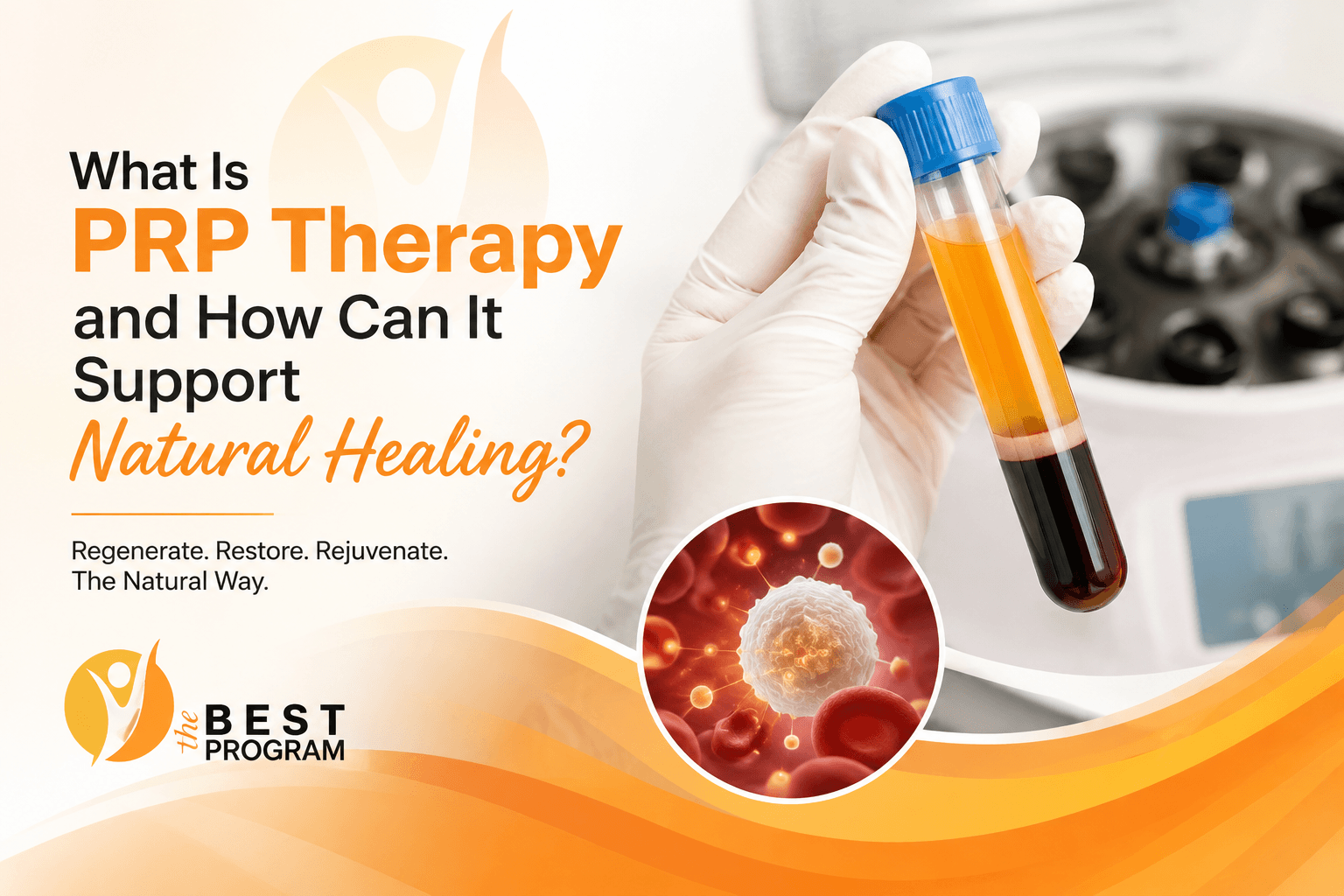
Both treatments start with your own blood. Both concentrate platelets. Both get injected for similar purposes.
The differences come down to how the blood is processed and what that changes about the final product. This guide explains what actually separates them and which tends to suit which purpose.
Table of Contents
- The Short Version
- How PRP Is Made
- How PRF Is Made
- The Three Real Differences
- Side-by-Side Comparison
- Which Suits Which Purpose
- What the Evidence Shows
- What to Expect at Your Appointment
- Safety and Candidacy
- Conclusion
- FAQs
The Short Version
The comparison of PRP vs PRF comes down to two processing choices: whether an anticoagulant is added, and how fast the blood is spun.
PRP uses an anticoagulant and a faster spin. The result is a liquid concentrate of platelets.
PRF uses no anticoagulant and a slower spin. The blood begins to clot naturally, forming a fibrin mesh that traps platelets and white blood cells.
That fibrin mesh is the meaningful difference. It releases growth factors more gradually rather than all at once.
How PRP Is Made
The process takes place during your appointment.
- Blood is drawn, typically 15 to 60 milliliters depending on the treatment area
- An anticoagulant is added to prevent clotting
- The sample spins at relatively high speed in a centrifuge
- Components separate into layers by density
- The platelet-rich layer is drawn off
- That concentrate is injected or applied
The result: A liquid rich in platelets, which carry growth factors involved in tissue repair.
How PRF Is Made
The process looks similar but differs in two specific ways.
- Blood is drawn
- No anticoagulant is added
- The sample spins at lower speed for a shorter time
- Natural clotting begins, forming a fibrin matrix
- That matrix, containing platelets and white blood cells, is collected
- It is injected, or used as a gel-like membrane
The result: A scaffold rather than a liquid. Because clotting starts immediately, PRF must be used within minutes of preparation.
The Three Real Differences
Everything else follows from these.
1. Additives
PRP contains an anticoagulant. PRF contains nothing but your own blood. For patients who prefer no added substances, that matters.
2. Release rate
PRP delivers growth factors relatively quickly. The fibrin matrix in PRF releases them more gradually over a period of days, which is the main clinical argument for it.
3. White blood cell content
PRF generally retains more white blood cells. These take part in healing and immune signaling. Whether more is better depends on the application and is still debated.
Side-by-Side Comparison
| Factor | PRP | PRF |
|---|---|---|
| Anticoagulant | Yes | No |
| Spin speed | Higher | Lower |
| Final form | Liquid | Fibrin matrix or gel |
| Growth factor release | Faster | More gradual |
| White blood cell content | Lower | Generally higher |
| Time before use | More flexible | Must be used quickly |
| Research volume | Larger | Smaller, newer |
| Typical cost | Varies | Often similar or slightly higher |
| Can be combined with fillers | In some protocols | Used as a natural volumizer |
Which Suits Which Purpose
Providers generally choose based on the treatment area.
PRP is often preferred for:
- Hair restoration, where it has the largest research base
- Joint injections
- Combination with microneedling
- Situations requiring a more liquid product
PRF is often preferred for:
- Under-eye treatment, where its gradual release and natural composition are advantages
- Facial volume support
- Areas where a slower, sustained effect is desired
- Patients who prefer no additives
Either may be used for:
- General facial rejuvenation
- Combination protocols with microneedling
- Scalp treatment
An honest note: Provider preference and training influence this choice as much as evidence does. Ask your provider why they recommend one for your specific situation.
What the Evidence Shows
PRP has the larger body of research, particularly for hair restoration and certain joint applications. Study quality varies because preparation protocols differ widely between clinics, which makes comparing results difficult.
PRF is newer. Research is growing, particularly in dental and oral surgery contexts where it has been used extensively. Aesthetic applications have less published data.
What neither has: Large, standardized trials directly comparing the two across cosmetic applications. Claims that one clearly outperforms the other are not well supported.
Practical takeaway: Both are reasonable options. Neither is dramatically superior across the board. Preparation quality and injector skill likely matter more than which one you choose.
What to Expect at Your Appointment
The visit follows the same general pattern for both.
- Consultation and evaluation of the treatment area
- Blood draw, similar to any routine lab draw
- Numbing cream applied while the sample processes, roughly 20 to 30 minutes
- Centrifuge processing
- Injection or application, typically 15 to 30 minutes
- Aftercare instructions
Afterward:
- Mild swelling, redness, or bruising for a few days
- Tenderness at treatment sites
- Return to most normal activity the same day
- Avoid strenuous exercise for about 24 hours
- Avoid alcohol and blood-thinning supplements as directed
Results timeline: Both work gradually. Expect early changes around weeks 4 to 8 and fuller results at 3 to 6 months, depending on the application.
Safety and Candidacy
Because both use your own blood, allergic reaction risk is minimal.
Reasonable candidates:
- Generally healthy adults
- Realistic expectations about gradual improvement
- No active infection at the treatment site
- Normal platelet function
Not appropriate for people with:
- Platelet disorders or significant clotting abnormalities
- Active infection at or near the site
- Active cancer
- Certain blood disorders
- Pregnancy or breastfeeding
- Anticoagulant therapy, without physician clearance
Discuss with your physician if you: take blood thinners, have an autoimmune condition, or have had a poor response to a previous treatment.
Conclusion
The practical difference between these two is processing: PRF skips the anticoagulant and spins slower, producing a fibrin matrix that releases growth factors gradually. PRP is a liquid concentrate with faster release and a larger research base.
Both are reasonable, and neither is clearly superior overall. Ask your provider which they recommend for your specific area and why, and pay more attention to their experience than to which product they use.
FAQs
Is PRF better than PRP?
Neither is clearly better overall. PRF releases growth factors more gradually and contains no additives. PRP has more research behind it, particularly for hair.
Does the procedure hurt?
Numbing cream makes it tolerable. Most people describe pressure and brief stinging rather than significant pain.
How many sessions will I need?
It depends on the application. Facial and hair protocols commonly start with three sessions, followed by maintenance.
Can I be allergic to it?
Allergic reaction is essentially not a concern, since the material comes from your own blood.
How long do results last?
Typically several months to a year depending on the area and your individual response. Maintenance sessions are usually recommended.
Is PRF used for under-eye hollows?
Yes, it is a common application. Its gradual release and natural composition are the usual reasons given for choosing it there.
Can I combine either with microneedling?
Yes. Combining with microneedling is a common protocol for facial treatment.
Do I need to stop any medications first?
Your physician will advise. Blood thinners and certain supplements typically require discussion before treatment.
The right choice depends on the area you want treated and your individual situation. A consultation sorts that out quickly.
Call 954-627-9118 or schedule a consultation with Don D. Fisher, D.O.
Related reading: What Are PRP Injections? | PRP Microneedling | PRP 3D Plasma Gel