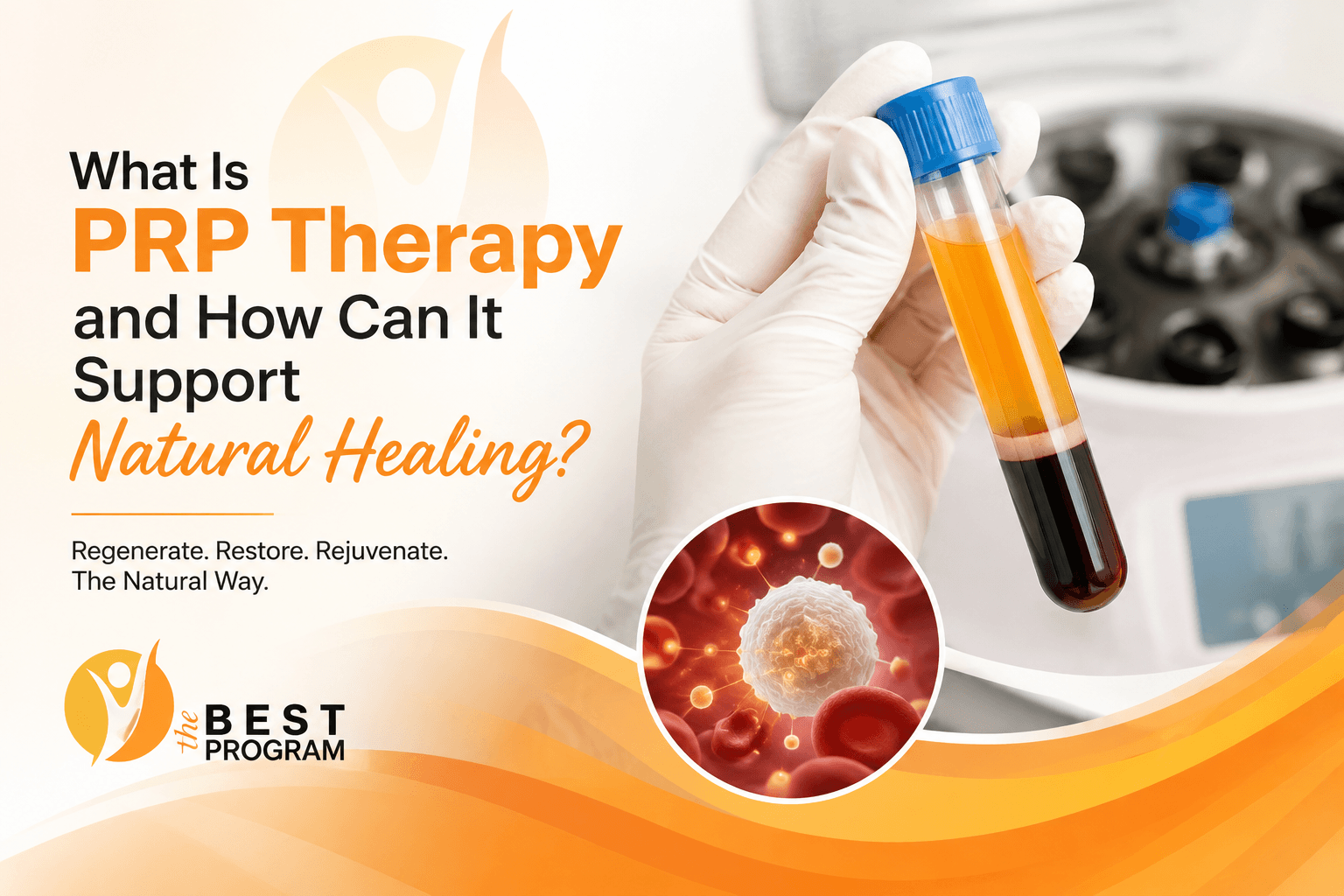
This procedure is discussed more often in marketing than in medical literature, which makes it hard to find straightforward information.
This guide covers what the treatment involves, which conditions it targets, what the research supports, and what a realistic recovery looks like. The language throughout is clinical, because that is what the topic deserves.
Table of Contents
- What the Procedure Involves
- Conditions It Is Used For
- The Proposed Mechanism
- What the Evidence Shows
- Who May Be a Candidate
- Step by Step Through the Appointment
- Recovery and Aftercare
- Results Timeline
- Risks and Considerations
- Alternatives to Consider First
- Conclusion
- FAQs
What the Procedure Involves
PRP for vaginal rejuvenation uses platelet-rich plasma prepared from the patient’s own blood, injected into specific areas of the vulvovaginal tissue.
The basic sequence:
- Blood is drawn and processed in a centrifuge
- The platelet-rich portion is separated
- Topical anesthetic is applied to the treatment area
- The concentrate is injected into designated sites, typically the anterior vaginal wall and clitoral area
- The appointment usually takes 45 to 60 minutes in total
Some providers use PRF instead of PRP, prepared without anticoagulant. The clinical reasoning is similar.
Conditions It Is Used For
Providers offer this treatment for several concerns, primarily related to menopausal tissue changes and postpartum recovery.
- Vaginal dryness and discomfort
- Pain during intercourse, clinically termed dyspareunia
- Stress urinary incontinence, meaning leakage with coughing, laughing, or exercise
- Reduced sensation or difficulty with arousal
- Lichen sclerosus, an inflammatory skin condition
- Tissue changes after childbirth
- Genitourinary syndrome of menopause, the current clinical term for menopause-related tissue changes
A necessary caution: Several of these symptoms have well-established treatments with far stronger evidence. Pelvic floor physical therapy for incontinence and vaginal estrogen for menopausal tissue changes are examples. Those should be discussed first.
The Proposed Mechanism
Platelets carry growth factors involved in tissue repair.
The proposed effects:
- Stimulation of collagen production
- Improved local blood supply
- Support for tissue thickness and elasticity
- Improved natural lubrication
- Nerve tissue support affecting sensation
These are the mechanisms proposed by practitioners based on how PRP works in other tissues. Direct confirmation in this specific application is limited.
What the Evidence Shows
Being straightforward here helps you make a real decision.
What exists:
- Small studies and case series reporting improvement in some symptoms
- Some research on lichen sclerosus with encouraging findings
- Preliminary work on stress urinary incontinence
- Considerable anecdotal patient reporting
What does not exist:
- Large randomized controlled trials
- Standardized protocols across providers
- Long-term outcome data
- FDA approval for this indication
Additional considerations:
- Placebo response is significant in studies of sexual function, which makes uncontrolled results hard to interpret
- Preparation methods vary widely between clinics
- Published studies are often small and short
The honest position: This is a treatment with plausible mechanisms and encouraging early reports, not an established standard of care. A provider who describes it that way is being accurate. One who guarantees results is not.
Who May Be a Candidate
Potentially appropriate for women who:
- Have symptoms that have not responded to first-line treatments
- Have discussed and considered conventional options
- Understand the treatment is not FDA-approved for this use
- Have realistic expectations
- Have no active infection
- Are in generally good health
Not appropriate for women who:
- Have an active vaginal or urinary tract infection
- Have unexplained vaginal bleeding that has not been evaluated
- Are pregnant or breastfeeding
- Have active gynecologic cancer
- Have platelet or clotting disorders
- Have not had a gynecologic evaluation
Essential first step: Any new symptom, particularly bleeding, pain, or a change in discharge, requires proper gynecologic evaluation before any cosmetic or regenerative procedure. Symptoms can indicate conditions requiring different treatment entirely.
Step by Step Through the Appointment
Knowing the sequence reduces anxiety considerably.
- Consultation and examination, including review of your history and current symptoms
- Consent discussion, covering the non-approved status, risks, and alternatives
- Blood draw, similar to routine lab work
- Topical anesthetic applied to the treatment area, left in place roughly 20 to 30 minutes
- Blood processed in the centrifuge during that time
- Injections performed at designated sites, taking only a few minutes
- Brief observation afterward
- Aftercare instructions provided
On discomfort: Most patients describe pressure and brief stinging rather than significant pain, given adequate topical anesthetic. Tell your provider if you are uncomfortable at any point.
Recovery and Aftercare
Downtime is minimal for most women.
Common in the first days:
- Mild swelling
- Tenderness
- Light spotting
- A sensation of fullness
Typical aftercare instructions:
- Avoid intercourse for a period your provider specifies, commonly a few days
- Avoid baths, pools, and hot tubs briefly
- Avoid strenuous exercise for about 24 to 48 hours
- Showering is generally fine
- Wear comfortable, loose clothing
Contact your provider for: fever, increasing pain, heavy bleeding, foul-smelling discharge, or signs of infection.
Results Timeline
Changes develop gradually rather than immediately.
Weeks 1 to 2: Initial tenderness resolves. Little noticeable change.
Weeks 3 to 6: Some women report early improvement in dryness or comfort.
Months 2 to 3: This is when reported changes are most commonly noticed.
Months 3 to 6: Peak effect for most who respond.
Duration: Reported effects commonly last somewhere between several months and about a year. Repeat treatment is often recommended.
Important: Not everyone responds. That possibility should be part of your consultation before you pay.
Risks and Considerations
Because it uses your own blood: Allergic reaction risk is minimal.
Possible risks include:
- Injection site pain or bruising
- Swelling
- Infection, as with any injection
- Temporary increased sensitivity
- No improvement at all
- Cost without benefit
Financial consideration: This is not covered by insurance. Ask for total pricing including any recommended repeat sessions before starting.
Regulatory note: PRP is not FDA-approved for this indication. Your provider should tell you this clearly and document your consent.
Alternatives to Consider First
Several options have stronger evidence and often lower cost.
| Concern | Better-Established Options |
|---|---|
| Stress urinary incontinence | Pelvic floor physical therapy, pessary, surgical options |
| Vaginal dryness | Vaginal moisturizers, lubricants, local estrogen therapy |
| Genitourinary syndrome of menopause | Local estrogen, other prescription options |
| Pain with intercourse | Evaluation for underlying cause, pelvic floor therapy |
| Lichen sclerosus | Topical corticosteroids, the established first-line treatment |
Pelvic floor physical therapy deserves particular mention. It has solid evidence for incontinence and pelvic pain, is often covered by insurance, and is significantly underused.
A provider who discusses these alternatives openly is giving you better care than one who moves straight to an injectable procedure.
Conclusion
This procedure uses your own platelet-rich plasma injected into vulvovaginal tissue, with the aim of supporting collagen, blood supply, and tissue quality. Early reports and small studies are encouraging, but large controlled trials do not exist and it is not FDA-approved for this use.
If symptoms are affecting your quality of life, start with a proper gynecologic evaluation and a discussion of established treatments. This may be a reasonable option when those have not worked, provided you understand what the evidence does and does not show.
FAQs
Is this treatment FDA approved?
No. PRP is not FDA-approved for this indication. Your provider should state this clearly.
Does it hurt?
Topical anesthetic is used. Most patients report pressure and brief stinging rather than significant pain.
How long do results last?
Reported effects commonly last several months to about a year. Repeat sessions are often recommended.
How soon will I notice a difference?
Most reported changes occur between weeks three and twelve, with peak effect around three to six months.
Is there downtime?
Minimal. Most women resume normal activity the same day, with brief restrictions on intercourse and swimming.
Will insurance cover it?
No. This is an out-of-pocket expense.
Can it help urinary leakage?
Preliminary research exists, but pelvic floor physical therapy has considerably stronger evidence and should generally be tried first.
What if it does not work? Some women see no improvement. Discuss this possibility and the clinic’s policy before paying.
Symptoms affecting comfort and quality of life deserve a full evaluation that considers all available options, including the well-established ones.
Call 954-627-9118 or schedule a consultation with Don D. Fisher, D.O.
Related reading: PRP for Vaginal Rejuvenation | Bioidentical Hormones for Menopause | PRP vs PRF