This is the question patients ask most, and marketing answers tend to be optimistic.
This guide gives you a realistic timeline, explains the difference between when the threads dissolve and when results fade, and covers what actually affects how long your outcome holds.
Table of Contents
- The Short Answer
- How the Treatment Works
- Threads Dissolving vs Results Fading
- Month-by-Month Timeline
- What Affects Your Longevity
- Types of Threads
- Realistic Expectations
- Maintenance and Repeat Treatment
- When Surgery Makes More Sense
- Conclusion
- FAQs
The Short Answer
A PDO thread lift typically produces results lasting 12 to 18 months, though individual outcomes range from under a year to around two years.
The threads themselves dissolve considerably sooner, generally within 4 to 6 months. Results persist beyond that because of the collagen response the threads stimulate.
The important framing: This is a temporary treatment. Anyone describing it as permanent or as equivalent to a facelift is overselling it.
How the Treatment Works
Polydioxanone is a material long used in surgical sutures. It dissolves safely in the body.
Two mechanisms operate together:
- Mechanical lift. Barbed threads are inserted under the skin and anchored. The barbs catch tissue, allowing the provider to reposition it upward. This produces the immediate visible change.
- Collagen stimulation. As the threads dissolve, the body responds by producing collagen along the thread path. This creates gradual tissue support that outlasts the threads.
The second mechanism explains why results continue after the material is gone.
Threads Dissolving vs Results Fading
Patients often confuse these, so it is worth separating them clearly.
| Timeline | What Is Happening |
|---|---|
| Months 0 to 4 | Threads intact, providing mechanical support |
| Months 4 to 6 | Threads dissolving, collagen response building |
| Months 6 to 12 | Threads gone, collagen providing support |
| Months 12 to 18 | Collagen support gradually declining |
| Beyond 18 months | Most patients return toward baseline |
Why results do not disappear when threads dissolve: The collagen laid down along the thread path provides ongoing support. This is the treatment’s actual long-term mechanism.
Month-by-Month Timeline
Week 1. Swelling and bruising. Possible puckering or irregularity where threads were anchored. Tightness and pulling sensations are normal. The result looks its most exaggerated here.
Weeks 2 to 4. Swelling subsides substantially. Puckering typically resolves. The true lift becomes apparent. Some sensation of tightness may persist.
Months 2 to 3. Collagen response builds. Many patients report the result looking more natural and settled.
Months 3 to 6. Often described as the peak. Threads are dissolving while collagen support is well established.
Months 6 to 12. Results generally hold steady, with gradual softening.
Months 12 to 18. Progressive decline as collagen support diminishes and normal aging continues.
What Affects Your Longevity
Several factors shift where you land in that range.
Longer results are more likely with:
- Younger age at treatment
- Good skin elasticity
- Mild rather than moderate sagging
- Adequate number of threads placed
- Skilled placement technique
- Non-smoking status
- Stable weight
- Consistent sun protection
- Good general health and nutrition
Shorter results are more likely with:
- Significant skin laxity
- Heavier facial tissue
- Advanced age
- Smoking, which impairs collagen production
- Significant weight fluctuation
- Sun damage
- Too few threads for the area treated
On thread count: Under-treating an area is a common cause of disappointing longevity. Ask how many threads your provider recommends and why.
Types of Threads
Different thread designs serve different purposes, which affects what to expect.
Barbed or cog threads. Have projections that grip tissue. Used for lifting and repositioning. Produce the immediate visible change.
Smooth or mono threads. No barbs. Placed to stimulate collagen rather than lift. Used for skin quality and mild tightening.
Screw or twist threads. Wound configuration. Used for volume support in specific areas.
Practical implication: A treatment using only smooth threads will not produce a lift. If lifting is your goal, barbed threads are required. Ask which type your provider plans to use.
Material note: PDO is the most common material, but PLLA and PCL threads also exist and generally dissolve more slowly, with correspondingly different longevity profiles.
Realistic Expectations
Being clear here prevents disappointment.
What this treatment can reasonably do:
- Produce a modest lift of mildly sagging tissue
- Improve jawline definition somewhat
- Soften early jowling
- Stimulate collagen for gradual skin quality improvement
- Offer a shorter-recovery alternative to surgery
What it cannot do:
- Match a surgical facelift
- Remove excess skin
- Correct significant sagging
- Produce permanent change
- Address volume loss, which requires filler
A useful comparison: A thread lift repositions tissue modestly. A facelift removes excess skin and repositions deeper structures. These are different procedures with different capabilities, and no amount of threads bridges that gap.
Maintenance and Repeat Treatment
Typical repeat interval: 12 to 18 months for most patients.
Considerations:
- Repeat treatments are generally safe when appropriately spaced
- Some providers report cumulative collagen benefit with repeated treatment
- Cost accumulates across repeated sessions
- Effectiveness may diminish over time as tissue laxity progresses
A worthwhile financial calculation: Multiply the cost of one treatment by the number you would need over five years. Compare that figure to a surgical consultation. For some patients, particularly those with more advanced sagging, the comparison favors surgery.
When Surgery Makes More Sense
An honest provider will raise this when appropriate.
Consider a surgical consultation if:
- You have significant excess skin
- Sagging is moderate to severe
- You want long-lasting results
- You have had thread lifts with limited benefit
- The cost of repeated treatments would exceed surgery over time
- You are prepared for the recovery involved
Thread lifts suit you better if:
- Sagging is mild
- You cannot take extended recovery time
- You want to defer surgery
- You want a reversible-by-time option
- You are not ready for a permanent change
Conclusion
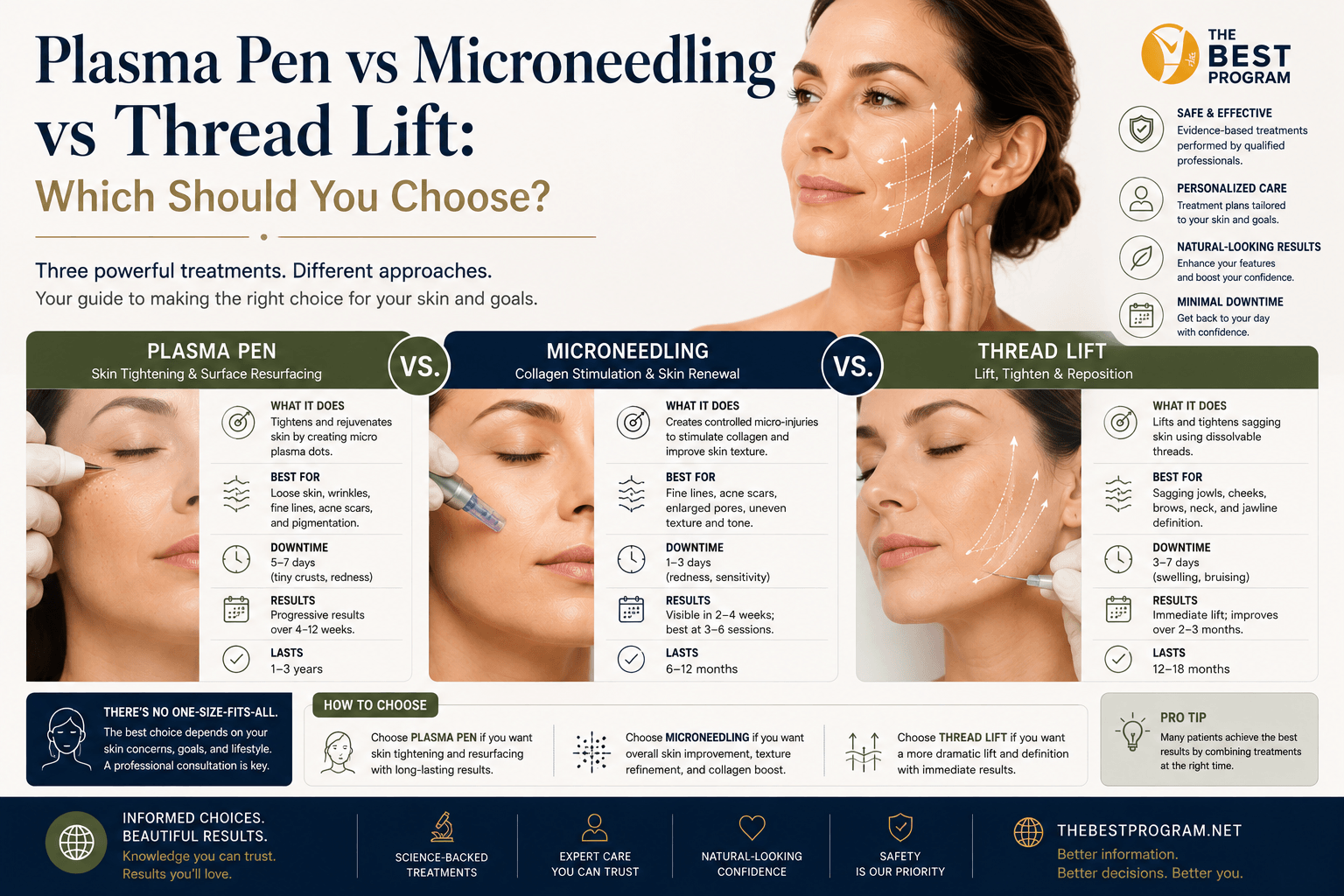
Results typically last 12 to 18 months, though the threads themselves dissolve within 4 to 6 months. The persistence comes from the collagen response, not the threads.
Longevity depends heavily on your skin quality, the degree of sagging, thread count, and technique. If your sagging is more than mild, a surgical consultation is worth having before committing to repeated treatments.
FAQs
How long do the threads themselves last?
PDO threads generally dissolve within 4 to 6 months. Results persist longer due to collagen stimulation.
Can I feel the threads under my skin?
Some patients feel them initially, particularly with facial movement. This typically resolves as the threads dissolve and swelling settles.
Is a thread lift painful?
Local anesthetic is used. Most patients report pressure during placement and tightness or soreness for several days afterward.
How much downtime is there?
Swelling and bruising typically last 3 to 7 days. Most people return to work within a few days.
Can threads be removed if I do not like the result?
Removal is possible shortly after placement but becomes difficult once tissue integration begins. Discuss this with your provider beforehand.
How many threads will I need?
This depends on the area and degree of sagging. Ask for a specific number and the reasoning behind it, since under-treating shortens results.
Can I combine a thread lift with other treatments?
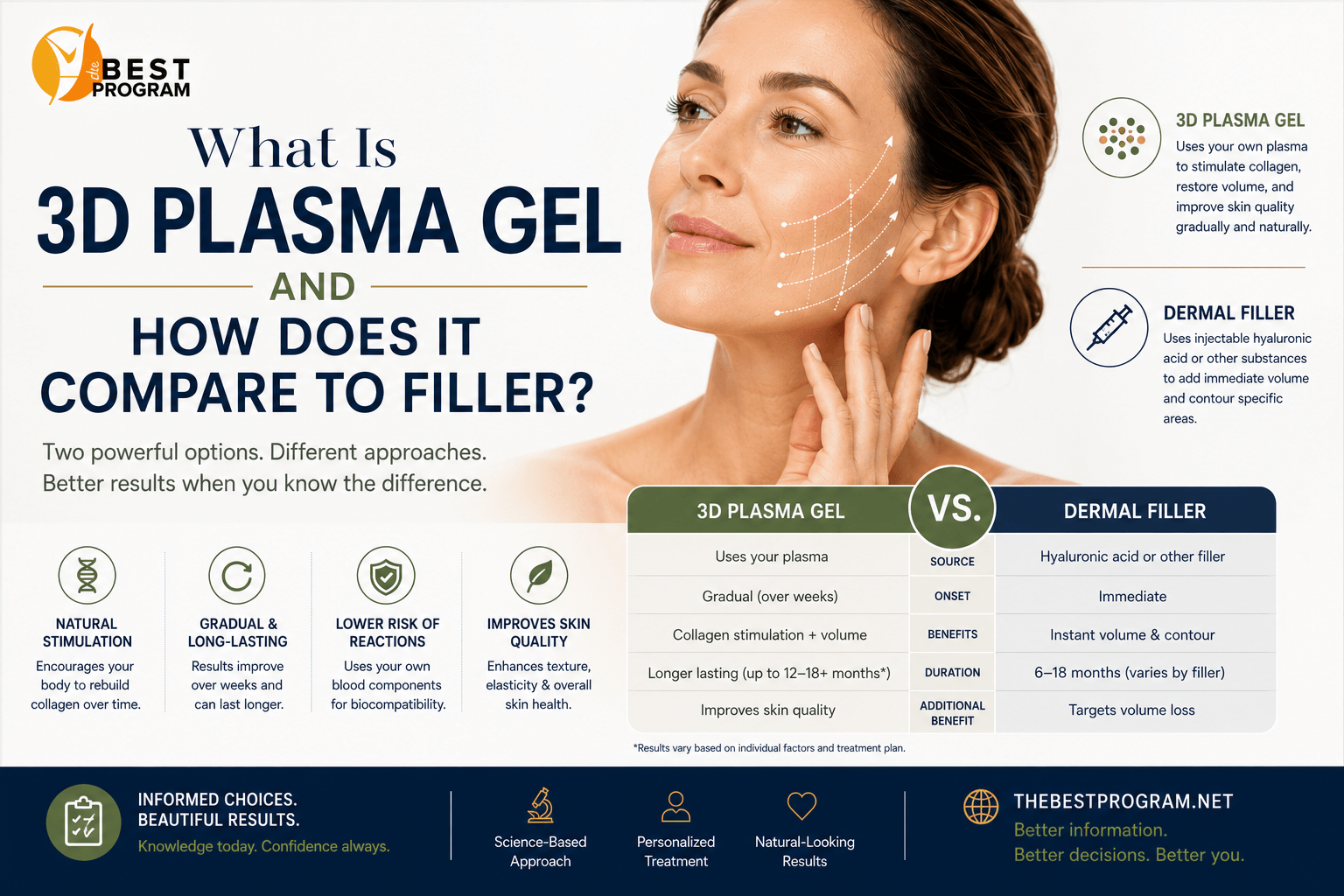
Yes. Fillers address volume, and neuromodulators address dynamic lines. Threads address position. Many plans combine them.
Is it worth it compared to a facelift?
For mild sagging and patients who want minimal downtime, yes. For moderate to severe sagging, a surgical consultation is the more sensible starting point.
Call to Action
Whether threads suit your degree of sagging is best determined in person, and sometimes the honest answer is that a different approach fits better.
Call (754) 946-2927 or schedule a consultation.
Related reading: PDO Thread Lift | Plasma Pen vs Microneedling vs Thread Lift | Aesthetic Facial Rejuvenation